


Civil litigation is rarely something individuals or businesses plan for, yet it is one of the most common ways legal disputes are ultimately resolved. Whether you are enforcing a contractual right, recovering a debt, or defending a claim brought against you, the way you prepare for litigation can have a decisive impact on the outcome of your situation.
In South Africa, civil litigation is governed by strict procedural rules and evidentiary requirements (i.e. a claim must be properly proven in the court of law). Many cases are weakened, or lost entirely, not because the legal claim lacked merit, but because parties failed to prepare properly from the outset.
This article explains what civil litigation involves and, more importantly, how to prepare effectively before issuing or defending legal proceedings.
Civil litigation refers to court proceedings between private parties, as opposed to criminal cases brought by the state. These disputes commonly involve contracts, unpaid debts, property matters, damages claims, or commercial disagreements between businesses.
Civil matters are usually heard in the Magistrates’ Court or the High Court, depending on the value and complexity of the dispute. While the courts provide a formal mechanism for resolving disputes, litigation is structured, time-bound, and procedurally demanding. Entering the process without preparation exposes parties to unnecessary risk.
Litigation is generally a last resort, but there are situations where it becomes unavoidable. This typically happens once informal engagement has failed and legal enforcement is required.
Common scenarios include:
Before proceeding, it is essential to assess whether litigation is proportionate to the dispute, both financially and strategically.
One of the most valuable steps in preparing for civil litigation is obtaining legal advice early. An attorney can evaluate the strength of the claim or defence, identify procedural risks, and advise on a strategy before positions harden, and most importantly aim to assist with obtaining preferential outcomes.
Of great importance is that early advice often clarify whether litigation is advisable at all, or whether alternative resolution mechanisms remain viable. It also helps avoid costly mistakes, such as issuing proceedings in the wrong court or missing prescription deadlines.
Choosing the correct court is a foundational step in any civil matter. Issuing proceedings in the wrong forum can result in delays, wasted costs, or dismissal.
In broad terms:
Jurisdiction is determined by factors such as the value of the claim, the nature of the dispute, and where the cause of action arose. Legal guidance at this stage is critical.
Prescription is one of the most common pitfalls in civil litigation. In most civil matters, claims prescribe after three years from the date the debt became due or the cause of action arose, unless prescription is interrupted.
Once a claim has prescribed, it becomes legally unenforceable, regardless of how strong it may otherwise be. Proper preparation includes confirming when prescription began running and taking steps to interrupt it where necessary.
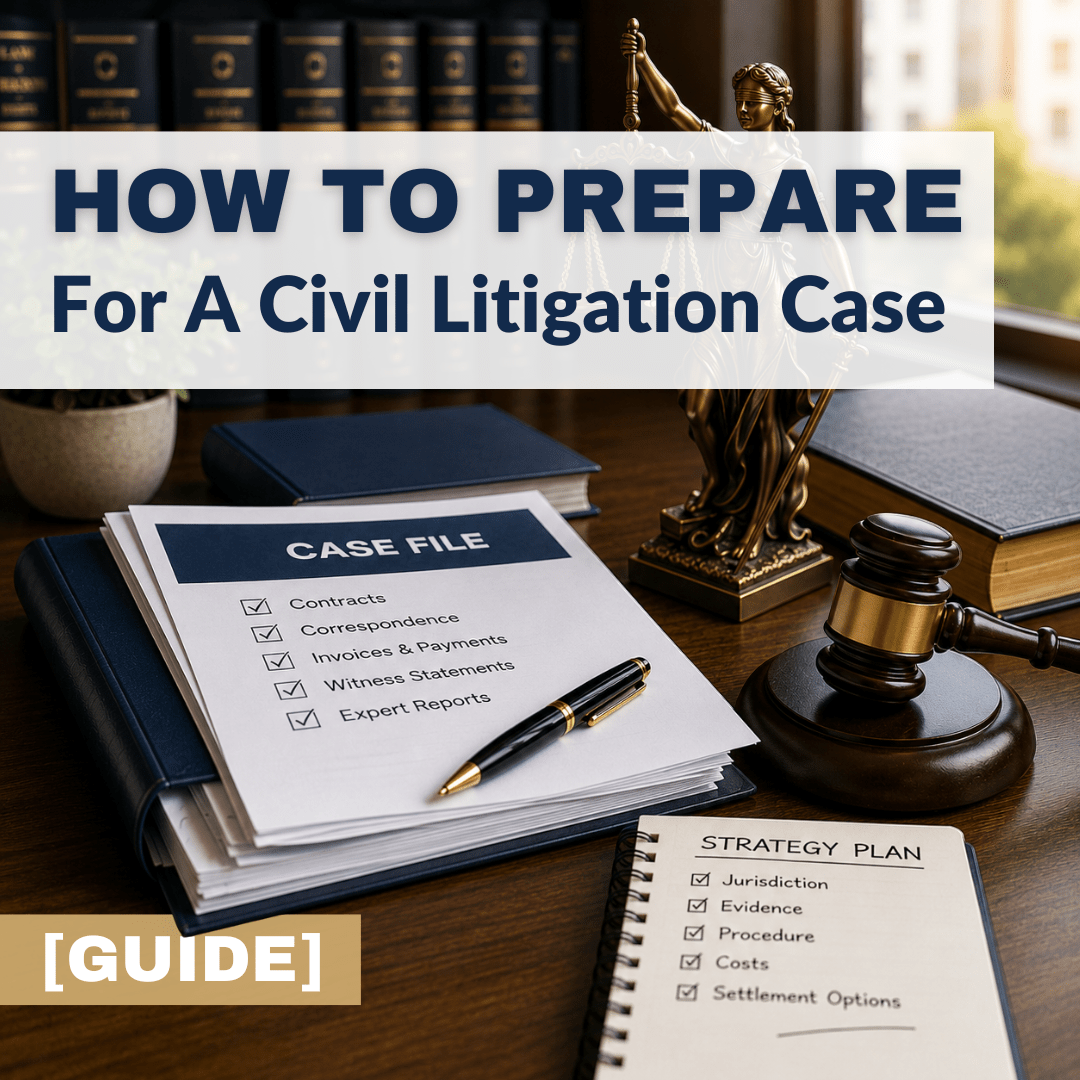
Civil litigation is evidence-driven. Courts decide disputes based on what can be proven, not on assumptions or perceptions of fairness. Evidence preparation should begin before any summons is issued or defended.
Relevant evidence may include contracts, correspondence, invoices, payment records, photographs, reports, or expert opinions. Documents should be preserved in their original form and organised clearly.
Cases often fail not because evidence does not exist, but because it is incomplete, inconsistent, or poorly presented.
Once litigation is underway, parties are required to disclose relevant documents through the discovery process. Discovery promotes transparency and ensures that disputes are decided on a full factual record.
Parties must disclose documents that support their case as well as those that may be unfavourable. Attempting to withhold documents often results in sanctions or adverse inferences being drawn by the court.
Preparing for discovery early avoids delays and credibility issues later.
Litigation involves cost, and parties should enter the process with realistic expectations. Legal fees, court costs, sheriff’s fees, and expert expenses can accumulate over time.
Even successful litigants may not recover all costs from the opposing party. A cost-benefit analysis at the outset helps determine whether litigation is commercially sensible and allows for informed decision-making as the matter progresses.
Courts increasingly expect parties to consider alternatives to litigation, such as negotiation, mediation, or arbitration. These mechanisms can resolve disputes faster and at lower cost, particularly where ongoing relationships are involved.
Preparing for litigation does not exclude considering settlement. In many cases, the mere readiness to litigate places a party in a stronger negotiating position.
Litigation is not only about legal principles; it is also strategic. Preparation involves clarifying objectives, understanding acceptable outcomes, and planning procedural steps carefully.
A clear strategy helps avoid reactive decisions driven by emotion or pressure. It also ensures that litigation remains aligned with broader commercial or personal goals.
Preparation is equally important for defendants. Receiving summons should never be ignored or dealt with informally. Defendants must act promptly, seek legal advice, and preserve all relevant evidence.
Failure to respond correctly can result in default judgment, which may be difficult and costly to set aside.
Civil litigation is governed by technical rules that are not intuitive to non-lawyers. Legal representation ensures procedural compliance, effective presentation of evidence, and proper enforcement of rights.
Attorneys also play a key role in managing expectations, advising on settlement, and protecting clients from unnecessary exposure.
Our experienced EWS Legal Team assists clients throughout the civil litigation process, from early assessment to final enforcement. Our services include:
Our approach focuses on preparation, proportionality, and achieving practical outcomes.
Civil litigation is a powerful legal mechanism, but it should never be approached without careful preparation. Early legal advice, evidence-based readiness, cost awareness and strategic planning significantly improve the prospects of success in any civil litigation case.
Whether you are considering instituting a claim or responding to one, EW Serfontein & Associates Inc. provides the guidance needed to navigate any civil litigation case in South Africa with clarity and confidence.
Contact Us today!
***
This article is not intended to constitute any form of financial or legal advice.
***
You might also be interested in reading one of our recent articles, EW Serfontein & Associates Inc. - Professional Legal Solutions.
Copyright © EW Serfontein & Associates Inc.